Sports Turf Installation in Arlington, TX
Professional sports turf installation for athletic fields, courts, and recreational facilities.
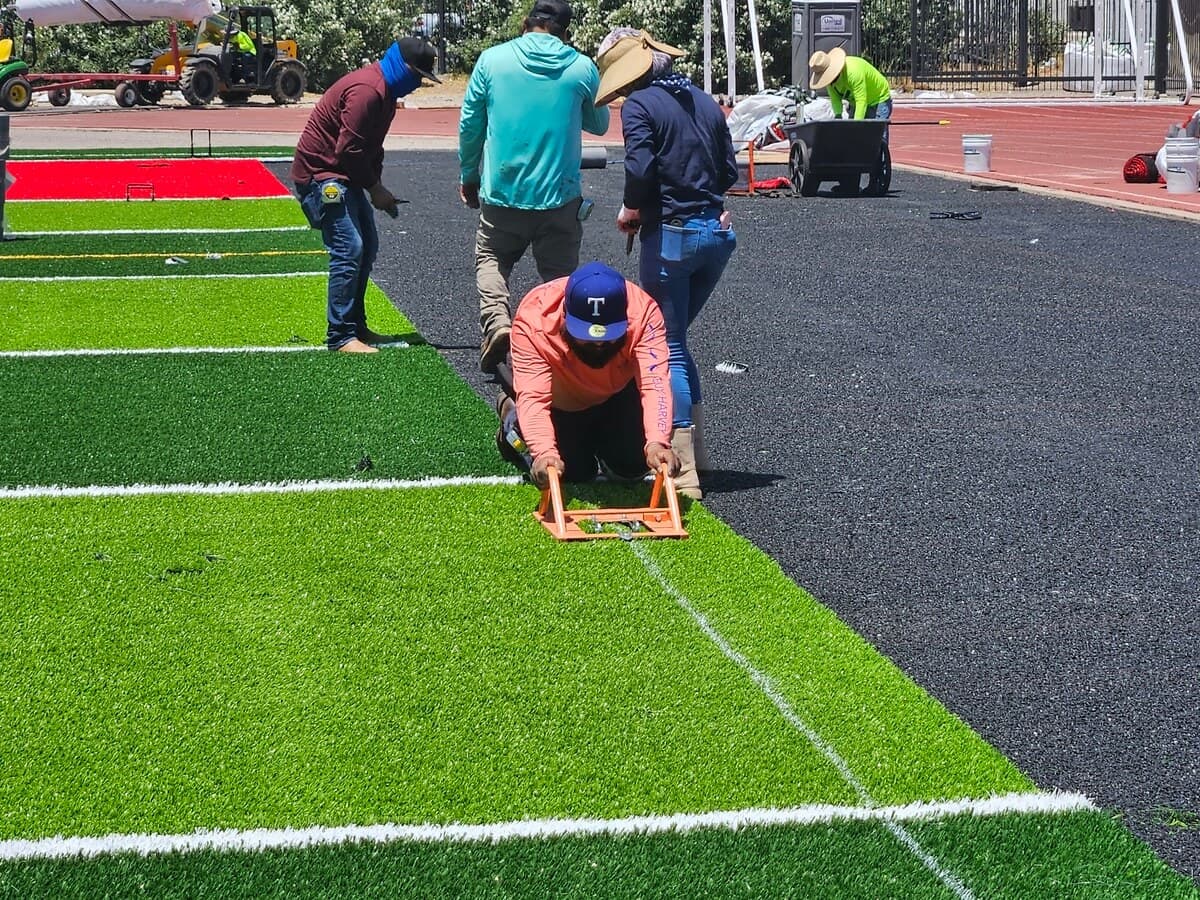
Sports turf installation transforms athletic facilities across Arlington with professional-grade synthetic playing surfaces designed for peak performance and long-term durability. Modern artificial turf systems provide consistent playing conditions year-round, eliminating weather-related field closures, muddy patches, and the constant maintenance demands of natural grass. Whether you are developing a new sports complex, upgrading an existing field, or converting traditional grass surfaces to synthetic alternatives, professional sports turf installation delivers immediate playability, reduced operating costs, and surfaces engineered to withstand intensive use from multiple sports programs. Today's sports turf technology features advanced drainage systems, shock-absorption padding for player safety, and realistic grass fibers that perform like natural turf without the watering, mowing, fertilizing, and seasonal downtime. Arlington schools, recreation departments, sports facilities, and private training centers choose artificial sports turf to maximize field availability, accommodate multiple programs on the same surface, and provide athletes with consistent footing and ball response throughout every season. Professional installation ensures proper base preparation, drainage integration, seam integrity, and infill distribution that directly impact field performance and longevity. This comprehensive guide covers everything you need to know about sports turf installation in Arlington, including what is included in professional installation, the complete process from site evaluation through final grooming, different applications for various sports, factors that influence project costs, and how to select the right system for your facility's specific needs and usage patterns.
What Our Sports Turf Installation Includes
Professional sports turf installation in Arlington encompasses complete field transformation from initial site preparation through final inspection and playability testing. Our comprehensive installation service addresses every component required for a high-performance synthetic athletic surface that meets industry standards and delivers the durability and performance your athletes deserve.
- •Site Assessment and Planning - Comprehensive evaluation of existing field conditions, drainage patterns, soil composition, grade requirements, and site-specific challenges that inform installation design and material specifications
- •Base Excavation and Grading - Removal of existing grass, organic materials, and unsuitable soils, followed by precise grading to establish proper drainage slopes, crown configurations, and field elevations that prevent water accumulation
- •Drainage System Installation - Integration of subsurface drainage infrastructure including perforated pipes, gravel layers, drainage channels, and outlet connections that rapidly remove rainwater and maintain field playability
- •Base Material Placement and Compaction - Installation of multiple layers of crushed stone aggregate materials, each precisely graded and mechanically compacted to create a stable, permeable foundation that supports the turf system without settling
- •Shock Absorption Pad Installation - Placement of foam padding layers beneath the turf surface that provide player safety through impact absorption, reduce injury risk, and meet performance standards for specific sports applications
- •Synthetic Turf Placement and Seaming - Unrolling turf panels across the prepared base, precise alignment of directional fibers, professional seaming techniques that create invisible joins, and securing methods that prevent shifting or wrinkling
- •Infill Material Distribution - Application of rubber granules, sand, or specialty infill products that stabilize turf fibers, provide cushioning, control surface temperature, and create the playing characteristics required for your sport
- •Line Striping and Marking - Installation of permanent inlaid lines for your primary sport, plus options for secondary sport markings using different line colors or removable systems for multi-sport field configurations
- •Perimeter Edging and Transitions - Professional edge treatments that secure turf perimeters, create clean transitions to surrounding surfaces, prevent trip hazards, and provide finished appearance with long-term edge integrity
- •Final Grooming and Quality Inspection - Power brushing to set fiber orientation, infill depth verification, seam inspection, performance testing, and complete quality review ensuring your field meets specifications and is ready for athletic use
Our Sports Turf Installation Process
Sports turf installation follows a methodical sequence of construction phases, each building upon previous work to create an athletic surface that performs reliably under intensive use. Our proven process ensures proper foundation preparation, professional turf installation, and quality results that meet performance standards for competitive athletic use.
Initial Consultation and Site Evaluation
Your sports turf project begins with a thorough site visit where we assess current field conditions, discuss your athletic programs and usage requirements, review sport-specific performance needs, and evaluate site challenges including drainage issues, grade concerns, and access considerations. We measure the field dimensions, document existing infrastructure like irrigation or lighting, discuss line configurations for primary and secondary sports, and review your timeline and budget parameters. This consultation provides the information needed to recommend appropriate turf systems, design the base construction approach, and develop accurate project specifications tailored to your facility's needs.
Design Development and Material Selection
Based on site evaluation findings and your program requirements, we develop detailed installation plans including base design with drainage specifications, turf system selection matched to your sports and usage intensity, pad configurations for appropriate shock absorption, and infill recommendations for desired playing characteristics. We provide material samples, discuss fiber types and pile heights for different sports, review warranty coverage, and present options for line systems and perimeter treatments. This phase includes finalizing field layout, confirming color selections, specifying infill types, and obtaining any required permits or approvals before construction begins.
Site Preparation and Base Construction
Installation begins with site clearing, removal of existing grass or surfaces, and excavation to depths required for proper base installation and drainage integration. We establish precise grades using laser-guided equipment, ensuring proper slopes and crown configurations that direct water to drainage points. Multiple layers of crushed stone aggregates are installed, each layer spread to specified thickness, mechanically compacted to target density, and verified for grade accuracy. Drainage systems including perforated pipes and collection channels are integrated into the base layers, connected to existing storm systems or outlet points, and tested to confirm proper water flow before subsequent layers are placed.
Shock Pad and Turf Installation
Once the base construction is complete and approved, shock absorption padding is rolled out across the field surface, seams are connected, and the pad is secured to prevent movement. Synthetic turf panels are then carefully positioned, aligned so fiber direction is consistent across the entire field, and seams are professionally joined using specialized adhesives and seaming techniques that create strong, invisible connections. Each seam is weighted during curing to ensure flat, seamless transitions between panels. The turf is secured at perimeters and transition areas, and any final trimming is completed to achieve precise fit against curbs, fencing, or adjacent surfaces.
Infill Distribution and Line Installation
With turf panels secured and seams cured, infill materials are distributed across the field using specialized equipment that ensures even coverage and proper depth. The infill is worked into the turf fibers through power brushing, settling the materials to target depth while setting fiber orientation for optimal appearance and performance. For inlaid line systems, turf sections are precisely cut along marked line positions, colored turf pieces are fitted into the openings, and seams are joined to create permanent, highly visible lines that will not fade or require repainting. Multi-sport configurations receive appropriate line colors and any additional markings required for secondary sports.
Final Grooming and Performance Testing
The completed field undergoes comprehensive finishing work including power brushing to achieve uniform fiber stand and infill distribution, perimeter edge verification, seam inspection for quality and flatness, and removal of all installation materials and debris. We conduct performance testing including drainage verification through water application, infill depth measurements at multiple locations, and visual inspection of all seams and line work. The field receives final grooming to set the playing surface, and we provide documentation of installation specifications, maintenance recommendations, warranty information, and contact details for ongoing support as you begin using your new sports turf facility.
Types of Sports Turf Installation We Provide
Arlington facilities utilize synthetic turf across diverse athletic applications, each requiring specific turf characteristics, performance features, and installation approaches tailored to the sport's unique demands and playing requirements.
Football and Soccer Fields
Full-size football and soccer fields represent the most common sports turf applications, requiring durable fiber systems that withstand cleated traffic, provide consistent footing for cutting and sprinting, and maintain appearance through intensive use. These installations feature longer pile heights for realistic grass feel, infill systems engineered for appropriate traction and cushioning, and shock pads calibrated to meet safety standards for contact sports. Multi-use configurations often include both football hash marks and soccer boundary lines using different colors, allowing schools and recreation departments to accommodate multiple programs on the same field throughout the year.
Baseball and Softball Fields
Baseball and softball turf installations combine different turf profiles for infield and outfield areas, with shorter, tighter fibers in infield zones providing true ball roll and consistent hops, while outfield sections use turf suited for running and fly ball play. Specialized base paths, pitching mounds, and home plate areas receive reinforced installations, and warning tracks may use different colored turf for player safety. These fields benefit from turf's elimination of bad hops from uneven grass, consistent playing conditions regardless of weather, and the ability to practice or play immediately after rain without field damage or muddy conditions.
Multi-Sport Training Facilities
Indoor and outdoor training centers install versatile turf systems designed to support various sports including speed and agility training, strength and conditioning work, tactical practice, and skill development across multiple sports. These installations often feature specific zones with different turf types, such as high-traffic runway areas with extra durable fibers, logo or branding elements integrated into the turf design, and perimeter areas with different pile heights or colors for functional zoning. Training facility turf must handle intense daily use from athletes wearing different footwear types while maintaining consistent performance and appearance throughout the facility.
Track Infield Conversions
High school and collegiate facilities with running tracks often convert interior grass fields to synthetic turf, creating year-round athletic surfaces for football, soccer, lacrosse, and other field sports without disrupting the surrounding track. These installations require careful coordination between turf perimeters and track surfaces, precise drainage planning since track curbs affect water flow patterns, and infill selections that will not migrate onto the track surface. Infield conversions maximize facility utilization by eliminating grass maintenance, preventing field damage during wet conditions, and providing sports programs with reliable practice and competition surfaces throughout all seasons.
Recreational and Youth Sports Fields
Parks, recreation departments, and youth sports organizations install sports turf on smaller fields, practice areas, and multi-use recreation spaces where durability and safety are priorities. These applications often use softer infill systems for youth player safety, bright line colors for visibility, and turf specifications that balance performance with budget considerations for community facilities. Recreational field installations create playable surfaces in areas where natural grass struggles due to heavy use, shade conditions, or maintenance limitations, while providing safe, consistent playing conditions for community sports programs and casual recreation activities.
Why Arlington Facilities Choose Our Sports Turf Installation
Selecting the right sports turf installer directly impacts field performance, installation quality, and long-term satisfaction with your investment in synthetic athletic surfaces. Our approach prioritizes technical precision in every phase of the installation process, ensuring your field is built on a properly engineered foundation with drainage systems that function as designed, seams that remain invisible and secure through years of use, and infill distribution that creates consistent playing characteristics across the entire surface. We maintain clear communication throughout your project, providing detailed progress updates, addressing questions promptly, and coordinating installation schedules to minimize disruption to your athletic programs or facility operations. Our installers understand the performance requirements specific to different sports, applying that knowledge to turf placement, line configurations, and finishing work that meets the expectations of coaches, athletes, and facility managers. We source quality materials from reputable manufacturers, follow installation best practices established by industry standards, and stand behind our workmanship with comprehensive support after your field is complete. Local knowledge of Arlington soil conditions, drainage challenges, and climate factors informs our base design and installation approach, while attention to detail in grade verification, seam construction, and quality control ensures your field performs reliably from the first practice through years of athletic competition. Our goal is delivering a sports turf installation that meets your specifications, serves your athletic programs effectively, and provides the durability and performance you expect from a professional synthetic field system.
Factors That Affect Sports Turf Installation Pricing
Sports turf installation costs vary significantly based on project specifications, site conditions, and performance requirements. Understanding the factors that influence pricing helps facilities plan budgets and make informed decisions about turf systems and installation approaches.
Field Size and Sport Configuration
Field dimensions directly impact material quantities and installation labor, with full-size football or soccer fields requiring significantly more turf, infill, and pad materials than smaller practice areas or youth fields. Multi-sport configurations with multiple line systems add costs for additional cutting and inlay work. Larger fields also require more extensive base preparation and drainage infrastructure, increasing overall project investment compared to smaller recreational installations.
Turf System Quality and Performance Features
Synthetic turf products range from basic recreational grades to premium systems engineered for elite competition, with fiber technology, pile height, backing materials, and warranty coverage varying across price points. Higher-performance systems feature advanced fibers that resist wear and maintain appearance longer, superior backing that prevents seam separation, and infill-free or reduced-infill designs that command premium pricing. Sport-specific turf systems optimized for football, soccer, baseball, or other athletics include features that enhance performance for those applications but increase material costs.
Shock Absorption Pad Specifications
Pad systems beneath the turf surface provide critical player safety through impact absorption, with pad thickness, density, and material composition determining both protective performance and cost. Basic pad systems meet minimum safety standards at lower price points, while advanced pads offering superior shock absorption, better drainage characteristics, or longer performance life increase project investment. Some installations omit pads entirely for budget considerations, though this approach sacrifices important safety benefits that protect athletes during falls and impacts.
Site Preparation and Drainage Requirements
Existing site conditions significantly influence installation costs, with fields requiring extensive excavation, poor soil removal, or complex drainage solutions increasing base construction expenses. Sites with adequate drainage and minimal grade issues require less preparation work, while locations with clay soils, poor natural drainage, or significant elevation changes need more substantial base construction and drainage infrastructure. Accessibility challenges, disposal of excavated materials, and coordination with existing utilities also affect site preparation costs.
Base Construction Depth and Materials
The engineered base beneath sports turf determines long-term field stability and drainage performance, with base depth and material specifications varying based on soil conditions and performance requirements. Standard installations use prescribed aggregate depths and compaction standards, while sites with poor native soils or high water tables may require deeper excavation, additional drainage layers, or specialized base materials that increase construction costs. Premium base designs offering superior drainage or extended service life represent higher initial investment but may reduce long-term maintenance requirements.
Infill Type and Quantity
Infill materials that stabilize turf fibers and create playing characteristics range from economical crumb rubber to premium organic or coated products, with material selection affecting both performance and cost. Standard infill systems use combinations of rubber and sand for cost-effective performance, while advanced infill products offering temperature control, antimicrobial properties, or environmental benefits command higher prices. Infill quantity depends on turf pile height and desired playing characteristics, with deeper infill profiles requiring more material and increasing project costs accordingly.
Service Area Coverage
We serve Arlington, Mansfield, Grand Prairie, Arlington Heights, Cedar Hill, Duncanville, Desoto, and all surrounding Tarrant County communities with professional sports turf installation services. Our service area extends to Midlothian, Waxahachie, Burleson, Crowley, Kennedale, Forest Hill, and other nearby cities where schools, recreation departments, and sports facilities need reliable synthetic turf installation. Whether your athletic facility is located in central Arlington or surrounding communities throughout the region, we provide the same quality installation, technical expertise, and professional service that creates high-performance sports surfaces built to last.
Related Services
Putting Green Installation
Custom putting green installation with professional-grade turf for practice and recreation.
Learn More →Playground Turf Installation
Safe, cushioned playground turf installation with shock-absorption for residential and commercial play areas.
Learn More →Pet Turf Installation
Pet-friendly artificial turf designed for durability, drainage, and easy cleaning in pet areas.
Learn More →Frequently Asked Questions About Sports Turf Installation
What types of sports turf installation projects do you handle in Arlington?+
We install sports turf for diverse athletic applications throughout Arlington including full-size football and soccer fields for high schools and recreation departments, baseball and softball facilities with specialized infield and outfield configurations, multi-sport training centers for sports performance facilities, track infield conversions, and recreational fields for parks and youth sports organizations. Our installations serve educational institutions, municipal recreation facilities, private sports complexes, athletic training centers, and community organizations. We handle projects ranging from small practice areas and youth fields to championship-caliber competition surfaces, with turf specifications, shock absorption systems, and line configurations tailored to each sport's specific performance requirements and your facility's usage patterns.
How long does sports turf installation take from start to finish?+
Sports field installation timelines typically range from four to eight weeks depending on field size, site conditions, weather factors, and project complexity. A standard football or soccer field with straightforward site conditions generally requires five to six weeks including base preparation, drainage installation, turf placement, and finishing work. Larger facilities, multi-field complexes, or sites requiring extensive drainage solutions may extend to eight weeks or longer. Baseball fields with multiple turf profiles and specialized areas often need six to seven weeks for complete installation. Weather significantly impacts timelines since base construction and compaction require dry conditions. We provide detailed project schedules during planning, coordinate installation phases to minimize disruption to athletic programs, and maintain communication about progress throughout the construction process.
What is included in the base preparation for sports turf installation?+
Base preparation encompasses complete site transformation including removal of existing grass, organic materials, and unsuitable soils to depths required for proper drainage and stability. We establish precise grades using laser-guided equipment, creating field crown or slope configurations that direct water to collection points and prevent surface ponding. Multiple layers of crushed stone aggregates are installed with each layer spread to specified thickness and mechanically compacted to engineering standards. Subsurface drainage systems including perforated pipes, gravel trenches, and outlet connections are integrated into base layers, designed to rapidly remove rainwater and maintain field playability. The completed base provides a stable, permeable foundation that supports turf and athletes without settling, manages water effectively, and creates the platform for long-term field performance. Proper base construction is critical to field longevity and represents the most important phase of quality sports turf installation.
Do you serve areas outside Arlington for sports turf installation?+
Yes, we provide sports turf installation throughout Arlington and surrounding communities including Mansfield, Grand Prairie, Cedar Hill, Duncanville, Desoto, Midlothian, Waxahachie, Burleson, Crowley, Kennedale, Forest Hill, and other Tarrant County locations. Our service area extends to facilities throughout the region where schools, recreation departments, sports organizations, and private athletic facilities need professional synthetic turf installation. Travel to your location is included in project pricing, and we provide the same quality installation and technical expertise regardless of where your facility is located within our service area. During initial consultation we confirm service availability for your specific location and discuss any site access or logistics considerations relevant to your project.
What maintenance does sports turf require after installation?+
Sports turf requires significantly less maintenance than natural grass but does need regular care to maintain appearance and performance. Routine maintenance includes periodic grooming with drag brushes or power brooms to keep fibers upright and distribute infill evenly, debris removal through blowing or sweeping, and occasional deep cleaning to address accumulated dirt or organic matter. High-traffic areas may need additional infill added periodically to maintain proper depth and playing characteristics. Most facilities establish monthly or quarterly grooming schedules, with more frequent attention for intensively used fields. We provide detailed maintenance guidelines after installation, recommend appropriate equipment and procedures for your field, and offer maintenance services if you prefer professional care. Proper maintenance extends field life, preserves appearance, and ensures consistent playing performance throughout the turf system's service life.
How do you handle drainage for sports turf fields?+
Effective drainage is critical for sports turf performance and involves both subsurface drainage infrastructure and surface water management. We install perforated drainage pipes within the aggregate base layers, positioned to collect water that percolates through the turf and base materials, with pipes sloped to outlet points that connect to existing storm systems or drainage areas. Base materials are selected for permeability, allowing water to flow vertically through the turf backing and into drainage layers below. Surface grading with crown or slope configurations directs water across the field to collection points, preventing ponding even during heavy rainfall. Modern sports turf systems drain much faster than natural grass, with properly installed fields playable within minutes of rain ending. We design drainage systems based on site conditions, evaluate existing drainage infrastructure, and ensure adequate capacity for your location's rainfall patterns and field usage requirements.
Can you install turf on fields with existing tracks or infrastructure?+
Yes, we routinely install sports turf within existing running tracks, around light poles and goal posts, and in coordination with bleachers, fencing, and other athletic infrastructure. Track infield installations are common for high schools and colleges, requiring careful coordination between turf perimeters and track surfaces, drainage planning that accounts for track curbs, and infill management to prevent migration onto the track. We work around existing light poles, irrigation systems, scoreboards, and other fixed elements, integrating turf installations with your current facility features. During site evaluation we identify all infrastructure elements, plan turf layout accordingly, and address any relocation needs if existing features conflict with optimal field design. Our experience with complex athletic facilities ensures professional installations that integrate seamlessly with your existing infrastructure while maximizing usable field area.
What warranties or guarantees come with sports turf installation?+
Sports turf installations include manufacturer warranties on turf materials covering defects in materials and manufacturing, typically ranging from eight to fifteen years depending on product selection. These warranties protect against premature wear, backing separation, fiber degradation, or other manufacturing defects when proper maintenance is performed. Installation workmanship is backed by our guarantee covering seam integrity, base construction, drainage function, and proper turf placement. Warranty terms vary by turf manufacturer and product line, with premium systems generally offering longer coverage periods. We provide complete warranty documentation after installation, explain coverage terms and maintenance requirements, and facilitate any warranty claims if issues develop. Pad systems, infill materials, and other components may carry separate warranties from their manufacturers. Understanding warranty coverage and maintenance obligations helps protect your investment and ensures long-term field performance.
Ready to Get Started?
Contact us today for a free quote on sports turf installation in Arlington, TX.